
Dense brush, vines, saplings, unwanted vegetation, small trees, and surface debris can make land difficult to inspect, maintain, access, or develop. Clearing the property gives you a better view of the terrain and helps create a workable starting point for construction, fencing, landscaping, driveway access, maintenance, or another planned improvement.
Before work begins, we discuss how you intend to use the land. This helps determine which areas should be cleared, what vegetation may remain, how equipment can enter the property, and what the finished site should support.
Land clearing should not begin with equipment moving across the property without a clear objective.
A vacant lot being prepared for development may require a different approach from overgrown acreage being reclaimed for maintenance. A residential property may need selected areas opened while preserving privacy, mature vegetation, or natural boundaries. A commercial site may require broader access for contractors, vehicles, or future construction.
We consider the current condition of the land and the result you want before recommending the scope. Terrain, vegetation density, drainage, structures, utilities, property boundaries, and equipment access all influence how the work should be approached.
The objective is to clear what prevents progress while retaining what supports your long-term plans.

Dense vegetation often conceals more than unused space.
Brush, vines, saplings, fallen branches, and unmanaged growth may hide damaged fencing, uneven terrain, drainage channels, discarded materials, old structures, erosion, wet areas, and existing access routes.
Clearing the agreed vegetation allows you to inspect the land more clearly and make better decisions about what should happen next.
A more visible property is easier to measure, maintain, plan, and prepare for contractors or future improvements.

Residential properties may become difficult to use when vegetation spreads across yards, acreage, fence lines, private roads, and areas surrounding the home.
Our residential Land Clearing Pensacola service helps property owners reclaim space for practical use. Your goal may be to improve visibility, prepare an area for fencing, create access, open a building site, reduce unmanaged growth, or make routine maintenance easier.
Before clearing begins, we consider the home, driveway, neighbouring property, landscaping, utilities, drainage, and any trees or natural areas you want to preserve.
The work is planned around how you intend to use the property after the clearing is complete.
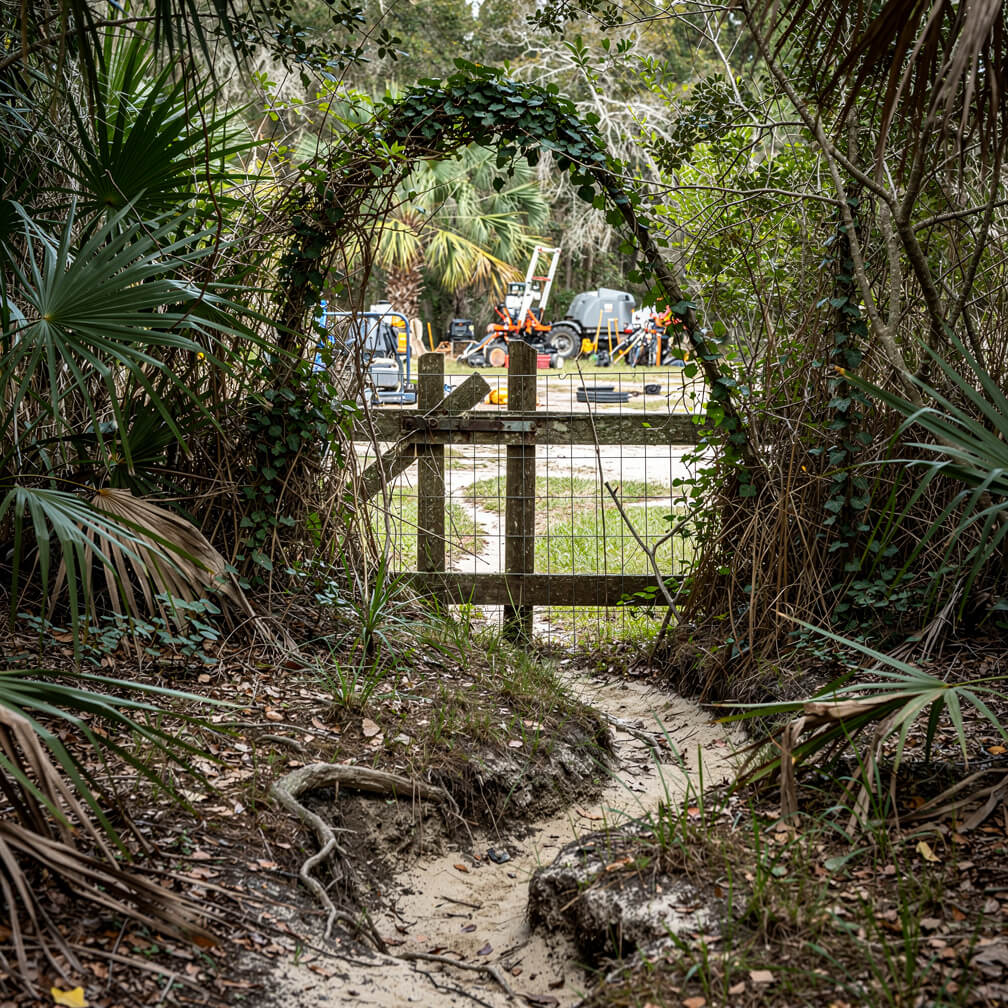
Commercial land clearing may be required before construction, expansion, equipment access, parking improvements, maintenance, fencing, or redevelopment.
These properties may include active businesses, tenants, contractors, vehicles, neighbouring sites, and restricted access areas. The clearing plan must therefore account for both the physical work and the way the property operates.
We discuss the intended use of the site, equipment routes, work-zone requirements, existing structures, drainage, boundaries, and the areas that must remain accessible.
Clear planning gives property owners, managers, and contractors a more workable site for the next phase.

Our Lot Clearing Pensacola service prepares residential lots, commercial parcels, vacant properties, and future building sites for development, maintenance, or improvement.
An uncleared lot may be covered by brush, saplings, vines, small trees, fallen materials, and surface debris. This can make it difficult to inspect boundaries, assess terrain, plan construction, or determine how equipment will access the property.
We evaluate the lot, discuss its intended use, and identify the areas that should be opened. Once the agreed work is complete, you have a more visible and manageable site for planning, surveying, fencing, construction, landscaping, or routine maintenance.

Our Brush Clearing Pensacola service addresses vines, undergrowth, saplings, weeds, and dense vegetation that restrict visibility and access.
Brush may spread across fence lines, trails, yards, commercial land, vacant properties, and areas surrounding buildings. As the growth becomes thicker, routine maintenance becomes increasingly difficult and important property features may disappear beneath it.
Clearing the brush can help reopen neglected sections, reveal boundaries, improve visibility, create access, and prepare the land for future use.
The work is focused on the agreed vegetation and the result you want rather than removing more growth than necessary.
Our Forestry Mulching Pensacola service uses specialised equipment to process qualifying brush, vines, saplings, and dense vegetation near ground level.
The vegetation is reduced into organic mulch that remains across the work area. This can help open trails, reclaim acreage, improve fence-line access, increase visibility, and manage overgrowth without producing large piles of cut vegetation.
Forestry mulching may be suitable when you want to clear selected areas while retaining mature trees or reducing major soil disturbance.
We assess vegetation size, density, terrain, ground conditions, access, and the intended result before confirming whether this method is appropriate for your property.
Our Site Preparation Pensacola service helps organise and prepare property before construction, fencing, driveway work, equipment access, landscaping, or another planned improvement.
After vegetation has been addressed, a site may still require surface clearing, debris handling, access preparation, rough ground work, or defined equipment routes.
We discuss what the next contractor or property improvement will require and evaluate the site accordingly. The objective is to create a more accessible and workable area for the next phase rather than clearing the land without considering what follows.
Lot clearing usually focuses on preparing an entire parcel or defined section for development, inspection, maintenance, or future use.
Brush clearing is often more selective and concentrates on removing dense undergrowth, vines, weeds, and saplings that have overtaken a particular area.
The correct choice depends on how much of the property needs attention, the type of vegetation present, and what you want the cleared area to support afterward.
An on-site evaluation helps define the appropriate scope without assuming that every overgrown property needs complete clearing.
Forestry mulching processes qualifying vegetation in place rather than cutting and stacking it for separate removal.
The resulting mulch remains on the ground and may provide temporary surface coverage as the organic material breaks down. This produces a different finished appearance from clearing that removes vegetation and debris from the site.
The best method depends on your intended use of the land. A property being prepared for construction may have different requirements from acreage being reclaimed for visibility, access, or routine maintenance.
We explain the expected result before work begins so you understand how the property will look and function afterward.
Clearing vegetation may be only the first requirement for a larger property plan.
Contractors and equipment may need defined access routes, open staging areas, clear working space, or surfaces that allow the next stage to begin.
Site preparation considers what must happen after the initial clearing. This may include organising the work area, handling surface debris, opening access, and preparing the site according to the confirmed project goal.
Thinking beyond the first phase helps reduce delays and gives the property a clearer direction.
Professional clearing equipment needs suitable access and operating space.
Narrow gates, soft ground, steep slopes, buildings, fences, standing water, overhead obstacles, neighbouring property, and underground concerns may influence how equipment enters and moves across the land.
We evaluate access before confirming the project. This helps determine which equipment is suitable, whether temporary access arrangements are needed, and which areas must remain protected.
A well-planned route reduces unnecessary disturbance and supports a more organised jobsite.
Vegetation can hide slopes, low areas, erosion, washouts, and natural drainage paths.
Removing growth may reveal how water moves across the property and where ground conditions require additional attention. Clearing should therefore consider existing terrain rather than treating the land as a flat and uniform surface.
We observe visible grade changes, wet areas, soil conditions, and access limitations before recommending the work.
Land clearing can expose the property and prepare it for future decisions, but it does not automatically correct every grading or drainage concern.
The area being cleared should be clearly identified before equipment enters the property.
Fences, survey markers, natural boundaries, neighbouring vegetation, and informal access routes may not always show the exact property line.
The property owner is responsible for confirming boundaries and obtaining any necessary permissions before work extends near adjoining land.
Clear boundaries help prevent accidental clearing outside the approved work area and keep the project aligned with the agreed scope.
Clearing work may take place near underground or above-ground systems.
These may include electrical lines, water lines, gas systems, septic components, irrigation, drainage pipes, communication cables, wells, landscape lighting, and private wiring.
Known utilities and private systems should be identified before work begins. Public utility-location services may not identify privately installed systems.
Sharing available information during the evaluation helps us understand potential restrictions and areas that require additional care.
Land clearing does not always mean removing everything.
You may want to preserve mature trees, privacy vegetation, natural buffers, landscape features, or specific sections of growth.
These areas should be discussed and clearly identified before equipment begins operating.
We confirm what is intended to remain and organise the clearing around the approved boundaries. Clear marking helps reduce confusion and supports a finished property that aligns with your plans.
Clearing can produce branches, brush, vines, small trees, roots, surface material, and other organic debris.
The way this material is handled depends on the selected clearing method and the confirmed scope.
Before work begins, we explain whether vegetation will be processed, moved, removed, left in designated areas, or handled in another agreed manner.
Understanding the debris plan helps you know what the property should look like after the clearing is complete and what additional preparation may still be required.
Answer to the questions Pencacola property owners ask most before scheduling an on-site evaluation.
Land clearing may include removing agreed vegetation, brush, vines, saplings, small trees, stumps, and surface debris. The exact scope depends on the property and its intended use.
Yes. We provide land clearing for residential properties, commercial parcels, vacant land, acreage, managed sites, and future development areas.
Yes. Trees and vegetation intended to remain should be identified clearly before work begins.
Lot clearing typically focuses on preparing a defined parcel for development, inspection, or improvement. Land clearing may apply to a wider range of property sizes and goals.
No. Forestry mulching processes qualifying vegetation close to ground level and leaves mulch across the site. Complete clearing may produce a different result.
Pricing depends on property size, vegetation density, terrain, equipment access, debris handling, preserved areas, site conditions, and the finished result required.
Only vegetation included in the agreed scope will be handled. Areas and trees intended to remain should be clearly identified.
Yes. The intended construction or development goal should be discussed so the work can support the next phase.
Yes. Property lines and work boundaries should be confirmed before clearing begins.
Vegetation may be processed, removed, moved, or left in designated areas depending on the selected method and agreed scope.
Yes. Removing dense growth may expose low areas, erosion, washouts, wet ground, and existing drainage paths.
Yes. We inspect vegetation, terrain, equipment access, nearby structures, boundaries, drainage, and the intended property use before confirming the scope.
Gulf Coast Tree and Land provides Land Clearing Pensacola for property owners who need overgrown areas opened, neglected land reclaimed, building sites prepared, access improved, or outdoor space made easier to maintain.
Through Lot Clearing Pensacola, Brush Clearing Pensacola, Forestry Mulching Pensacola, and Site Preparation Pensacola, the work can be matched to the actual condition of your land and the result you want to achieve.
Your property already has a purpose. The next step is to remove the vegetation and obstructions preventing you from moving forward.